
Discover Ozone Therapies
Take the first step towards a healthier you. Schedule your appointment today!
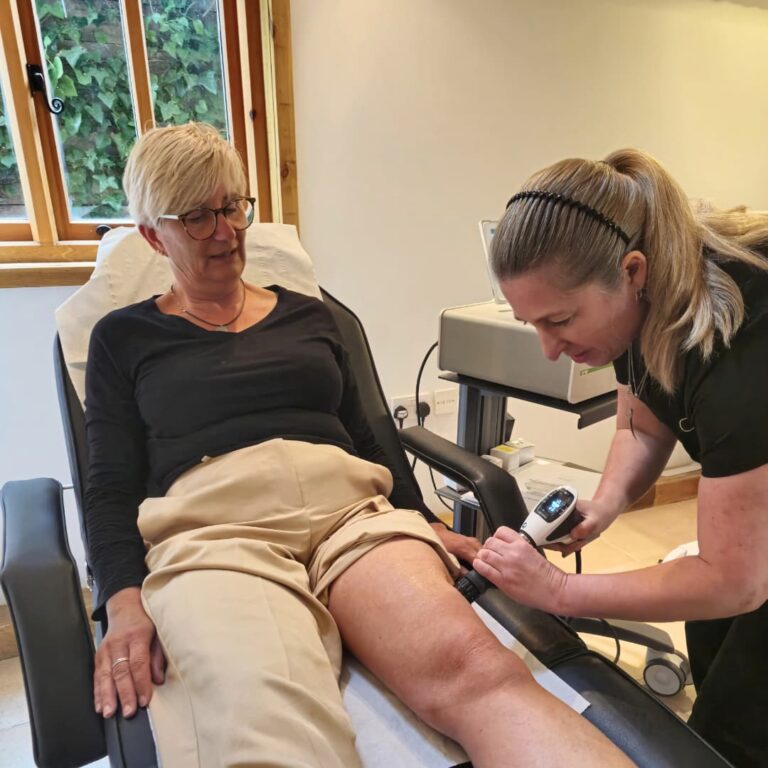
Are you struggling with chronic pain from conditions like plantar fasciitis, Achilles tendonitis, or tennis elbow? Have you exhausted other treatment options without relief? Shockwave therapy may be the answer.
How does shockwave therapy work?
Shockwave therapy involves delivering low-energy pressure waves to damaged tissues, such as tendons and muscles, stimulating blood flow and promoting healing. This non-invasive treatment can help:
Don’t let chronic pain hold you back. Reach out to the Ozone Clinic to discuss Shockwave Therapy on
01962 217110 or book online and start your journey to pain-free living today.
Are you suffering from chronic pain or injuries? Shockwave therapy may be an effective solution.
Consider shockwave therapy if you’re experiencing:
Especially for runners: If you’re struggling with plantar fasciitis, a common foot condition characterised by heel pain, shockwave therapy can help alleviate symptoms and get you back on your feet.
Shockwave therapy, also referred to as extracorporeal shockwave therapy (ESWT) is a non-invasive treatment that utilises focused sound waves to stimulate tissue repair and reduce pain. By delivering controlled bursts of energy to affected areas, shockwave therapy can promote healing and alleviate chronic conditions.
The pressure waves generated by shockwave therapy stimulate mechanical stress within the affected tissues. This mechanical stimulation can disrupt pain pathways, reduce inflammation, and promote tissue regeneration.
Shockwave therapy encourages healing and recovery by enhanced blood flow to the treated area, promoting oxygen and nutrient delivery. Improved blood circulation and oxygenation to the affected tissues can stimulate growth of new blood vessels, known as neovascularisation.
Shockwave therapy is having a huge impact on our clients lives, providing fast pain relief and aiding a speedy recovery from injuries.
Shockwave therapy is known for its ability to accelerate the healing process. It stimulates blood flow and tissue regeneration, leading to quicker recovery times compared to conventional physiotherapy techniques.
Shockwave therapy can provide immediate pain relief by disrupting pain signals and promoting the release of natural pain-inhibiting substances in the body. It’s effective in managing pain without the need for pain medication, which can have side effects.
By breaking down scar tissue and adhesions, shockwave therapy can enhance mobility and flexibility, which are often limited in chronic conditions.
It’s particularly effective for chronic musculoskeletal conditions that haven’t responded well to traditional treatments. Conditions like plantar fasciitis, tennis elbow, and shoulder tendinitis often see significant improvement with shockwave therapy.
Unlike some surgical options, shockwave therapy is non-invasive. This aspect significantly reduces the risks associated with invasive procedures, such as infection or complications from anaesthesia.
Typically, shockwave therapy requires fewer sessions compared to traditional physiotherapy. This can be more convenient and cost-effective in the long term.
Shockwave therapy is drug-free, which is particularly advantageous for clients who may have concerns about medication side effects or interactions. It offers a natural alternative to pain relief and healing without relying on pharmaceuticals.
In many cases, shockwave therapy can prevent the need for surgical interventions. By promoting tissue regeneration, reducing pain, and accelerating healing, it can be a viable alternative to surgery, especially for certain musculoskeletal conditions.
At The Ozone Clinic in Winchester, we provide a comfortable and relaxing environment for your shockwave therapy sessions. Our experienced functional health practitioners will administer the treatment using a state-of-the-art shockwave therapy device.
What to expect:
Our goal is to ensure a comfortable and effective treatment experience.
Start your journey to pain relief.
Book and secure your appointment online or over the phone on 01962 217110

You may experience some discomfort during treatment but the pain should be tolerable. The energy levels can be adjusted for your comfort. Due to the analgesic effect of shockwave therapy, many patients report immediate pain relief following the session.
Shockwave therapy is generally described as a mildly uncomfortable procedure. Some patients compare the sensation to that of a deep tissue massage or a rubber band snapping against the skin. However, the intensity of the discomfort can vary depending on the treated area and your individual pain tolerance.
Your therapist will adjust the intensity of the shockwaves to ensure your comfort. Any discomfort experienced during the session is typically temporary and subsides quickly.
Overall, most patients find shockwave therapy to be tolerable and well-worth the potential benefits.
Yes, shockwave therapy is a very safe treatment with NICE guidance for various conditions. The National Institute for Health and Care Excellence (NICE) provides evidence-based recommendations used within the NHS. When performed by qualified therapists, shockwave therapy carries minimal risk.
Shockwave therapy offers a clinically proven, non-invasive alternative to surgery and injections. It doesn’t require anaesthesia, medications, or invasive procedures. Many patients find it virtually painless, both during and after treatment.
Many patients experience significant improvement after just 2-3 sessions. The therapy aims to eliminate pain or restore mobility, ultimately improving your quality of life. In chronic cases where other treatments fail, shockwave therapy boasts a success rate of 60-80%.
The number of sessions depends on the specific condition being treated. Typically, 3-6 sessions are recommended, each lasting approximately 20-30 minutes. We offer packages for the initial 3 sessions, but sessions can also be purchased individually.
Shockwave therapy works by addressing the underlying causes of tendon pain and inflammation. By reducing inflammation, stimulating blood flow, and promoting tissue repair, shockwave therapy can alleviate discomfort, improve mobility, and accelerate the healing process.
This non-invasive treatment offers a promising approach for individuals suffering from tendon-related pain and injuries. By targeting the root causes of the problem, shockwave therapy can help restore function and improve overall quality of life.
At The Ozone Clinic, we specialise in radial shockwave therapy, a highly effective and versatile treatment for a wide range of conditions.
While both radial and focused shockwave therapy offer benefits, radial shockwave therapy is particularly well-suited for many musculoskeletal issues. Here’s why:
Shockwave therapy is generally well-tolerated, with minimal side effects. While some patients may experience mild soreness or discomfort immediately after treatment, these effects are typically temporary and resolve quickly. Bruising or swelling may also occur at the treatment site, but this is usually mild and short-lived.
Severe side effects are rare, and there is no evidence to suggest that shockwave therapy can cause serious health problems. If you experience any concerning symptoms, it’s important to contact your healthcare provider.
Overall, shockwave therapy is a safe and well-tolerated treatment option.
While shockwave therapy is generally safe, there are certain circumstances where it may not be recommended. It’s important to consult with a healthcare professional to determine if shockwave therapy is suitable for you.
Individuals with the following conditions or circumstances should generally avoid shockwave therapy:
Your therapist will establish a treatment schedule based on your needs. Generally, sessions are spaced a few days apart to allow for optimal healing between treatments
At The Ozone Clinic, we use the STORZ MASTERPULS® MP200 ULTRA radial shockwave therapy device from Venn Healthcare . This industry-leading device delivers focused acoustic waves to stimulate tissue repair and reduce pain.
The MP200 uses the concept of power density (measured in mJ/mm²) and pulse rate (measured in Hz) to define the treatment intensity.
Minimum and Maximum Settings:
The MP200 offers a range of power density and pulse rate settings to customise the treatment for your individual needs and tolerance. The specific minimum and maximum values might vary slightly depending on the device model, but generally fall within this range:
Pain and Treatment Intensity:
Higher power density settings don’t necessarily equate to increased pain. The therapist will adjust these parameters in a way that optimises both effectiveness and your comfort.
Here’s how pain can be managed during treatment:
By tailoring the power density and pulse rate, your therapist can deliver an effective treatment while minimising any potential pain. They will consider your specific condition and individual needs when determining the optimal settings.
No, it’s generally not recommended to have shockwave therapy every day. While the frequency of treatments can vary depending on the specific condition and individual response, most people benefit from allowing a few days of rest between sessions.
This allows your body time to recover and respond to the treatment. Your healthcare provider can advise you on the optimal frequency based on your needs and goals.
Yes, it’s possible to experience minor bruising after a shockwave therapy session. This is because the treatment can cause some inflammation and microtrauma in the treated area. However, bruising is usually mild and temporary, and it should subside within a few days.
If you experience severe bruising or other concerning symptoms after a shockwave therapy session, it’s important to contact your healthcare provider.
While shockwave therapy cannot directly remove bone spurs, it can help alleviate the pain and discomfort associated with them.
By reducing inflammation and improving blood flow to the affected area, shockwave therapy can:
While shockwave therapy may not eliminate bone spurs completely, it can significantly improve the quality of life for individuals suffering from bone spur-related pain and discomfort.
If you’re taking blood thinners or anticoagulants, it’s important to consult with your healthcare provider before undergoing shockwave therapy. While shockwave therapy is generally safe, there is a risk of increased bleeding in individuals on blood thinners.
Your doctor can assess your individual situation and determine if the potential benefits of shockwave therapy outweigh the risks. They might advise adjusting the medication temporarily to minimise the risk of bleeding.
| Cookie | Duration | Description |
|---|---|---|
| cookielawinfo-checkbox-analytics | 11 months | This cookie is set by GDPR Cookie Consent plugin. The cookie is used to store the user consent for the cookies in the category "Analytics". |
| cookielawinfo-checkbox-functional | 11 months | The cookie is set by GDPR cookie consent to record the user consent for the cookies in the category "Functional". |
| cookielawinfo-checkbox-necessary | 11 months | This cookie is set by GDPR Cookie Consent plugin. The cookies is used to store the user consent for the cookies in the category "Necessary". |
| cookielawinfo-checkbox-others | 11 months | This cookie is set by GDPR Cookie Consent plugin. The cookie is used to store the user consent for the cookies in the category "Other. |
| cookielawinfo-checkbox-performance | 11 months | This cookie is set by GDPR Cookie Consent plugin. The cookie is used to store the user consent for the cookies in the category "Performance". |
| viewed_cookie_policy | 11 months | The cookie is set by the GDPR Cookie Consent plugin and is used to store whether or not user has consented to the use of cookies. It does not store any personal data. |
Take the first step towards a healthier you. Schedule your appointment today!